A History Written in Water
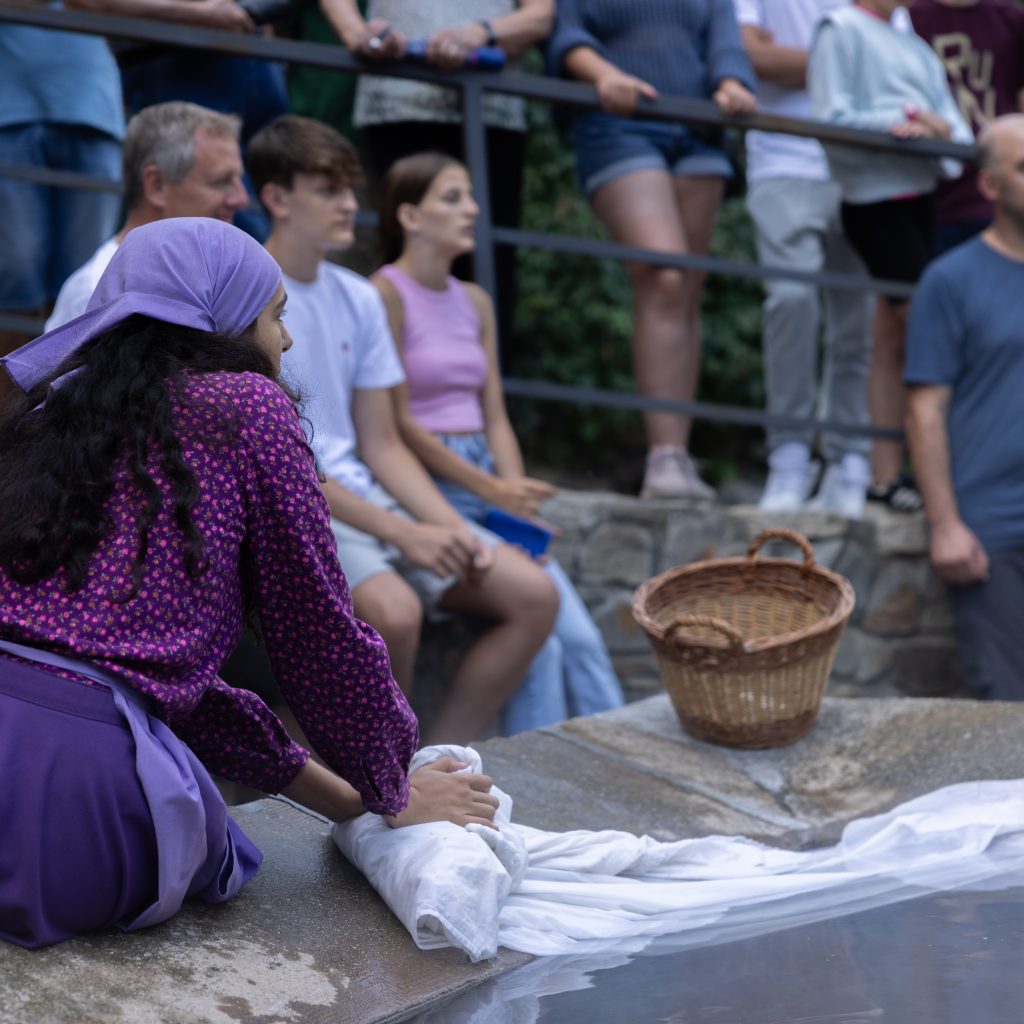
For centuries, thermal water was primarily used for everyday and community purposes. Springs and washhouses were places of gathering and work, while the warmth of the water encouraged artisanal activities, particularly those related to the processing of wool and textiles. Water thus became an essential resource for the local economy and helped shape the historic settlement of Escaldes-Engordany.
Over time, the thermal waters began to attract visitors from further afield. During the 19th and 20th centuries, the emergence of establishments dedicated to bathing and welcoming visitors fostered the development of thermalism and helped open Escaldes-Engordany — and, by extension, Andorra — to tourism. This process, driven by the country’s modernization and improved communications, gradually transformed the town and established tourism, commerce and thermalism as key pillars of its economy.
The relationship with water has never been interrupted; instead, it has evolved over time, from springs and washhouses to thermal establishments and today’s wellness spaces.
Heritage: Stone, Water and Memory
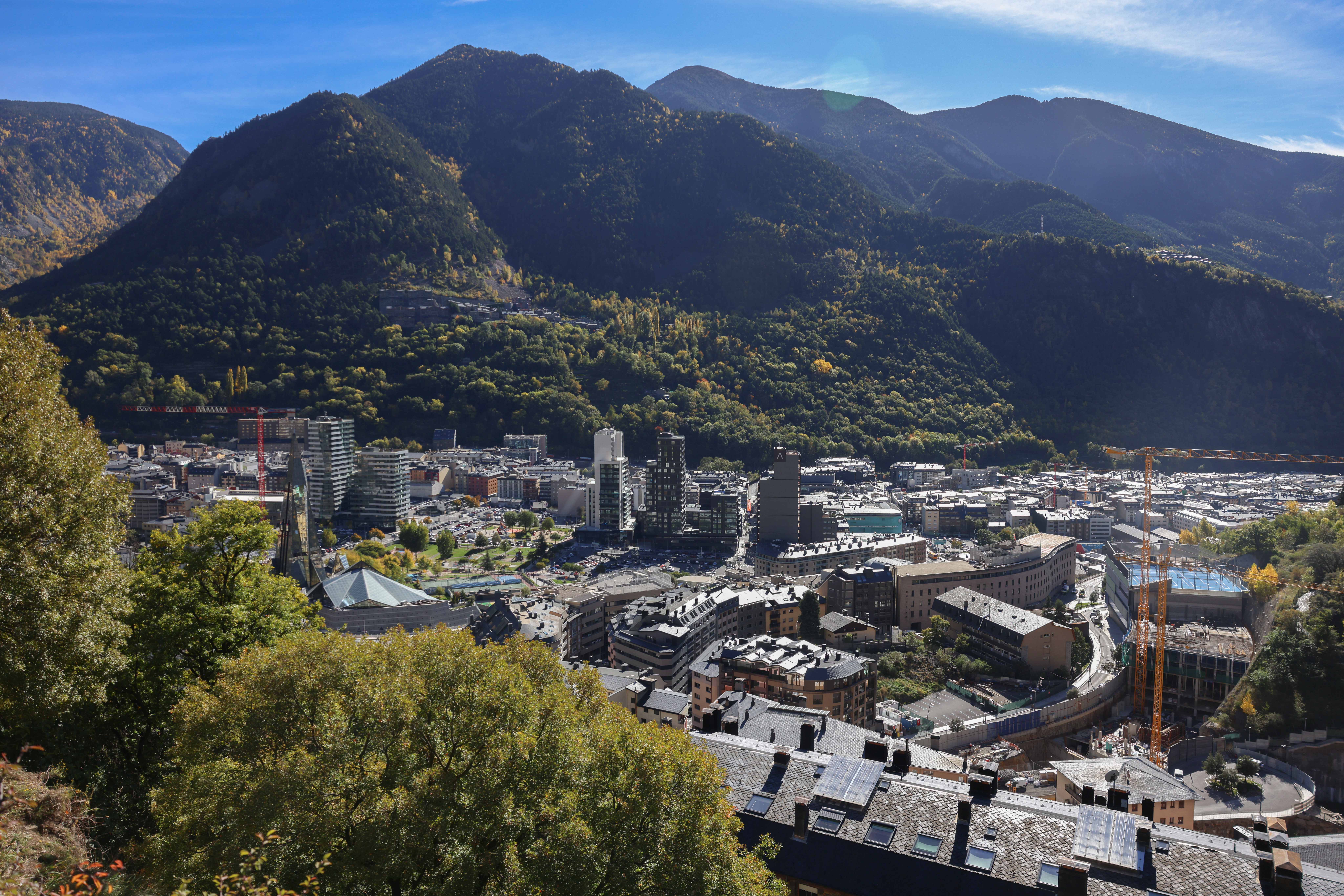
The heritage of Escaldes-Engordany is diverse and reflects the different stages of its history. Traditional granite architecture, historic bridges, springs and washhouses, and buildings associated with tourism shape an urban landscape that preserves the memory of the town.
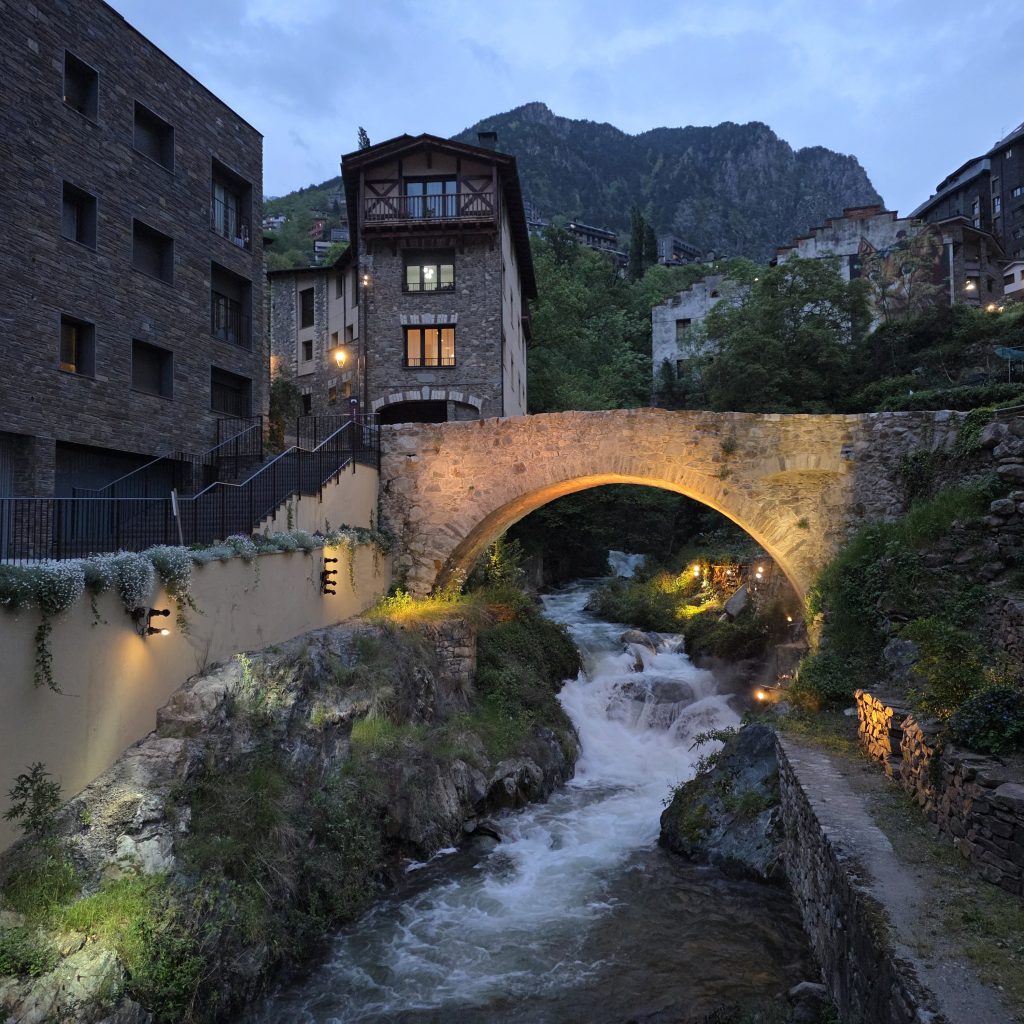
The historic bridges form one of the area’s most distinctive heritage ensembles. Particularly noteworthy is the Pont de la Tosca, built in 1820 over the final stretch of the Madriu River. Its silhouette features on the coat of arms of Escaldes-Engordany and is one of its most recognizable symbols. The Pont d’Engordany, built in 1785 over the Valira d’Orient, together with the Pont dels Escalls, Pont Pla and Pont de Sassanat, completes this heritage associated with the rivers and the historic routes that once crossed the territory.
The use of granite in architecture, particularly evident in buildings from the 20th century, is another defining feature of Escaldes-Engordany’s urban landscape. The Church of Sant Pere Màrtir is one of the most representative examples, alongside other buildings in the historic centre, such as the Hostal Valira, closely linked to thermalism and the arrival of tourism.
This heritage reveals the different layers of Escaldes-Engordany’s history: the stone of the mountains, the paths that cross the rivers, the waters that spring from the earth, and a town transformed by thermalism and tourism.
Caldes: Reaffirming the Town’s Thermal Identity
Escaldes-Engordany reaffirms its thermal identity through the Caldes Project, an urban and artistic initiative that places water, heritage and culture at the heart of the transformation of the historic part of the village. Inaugurated in September 2025, the project takes thermal water as its guiding thread, bringing together heritage, art and public space in a riverside route that invites visitors to stroll through and rediscover this part of the town.
The project draws on elements that form part of Escaldes-Engordany’s thermal heritage and collective memory — springs, washhouses, streets and spaces associated with water — and brings them back into the everyday life of the local community.
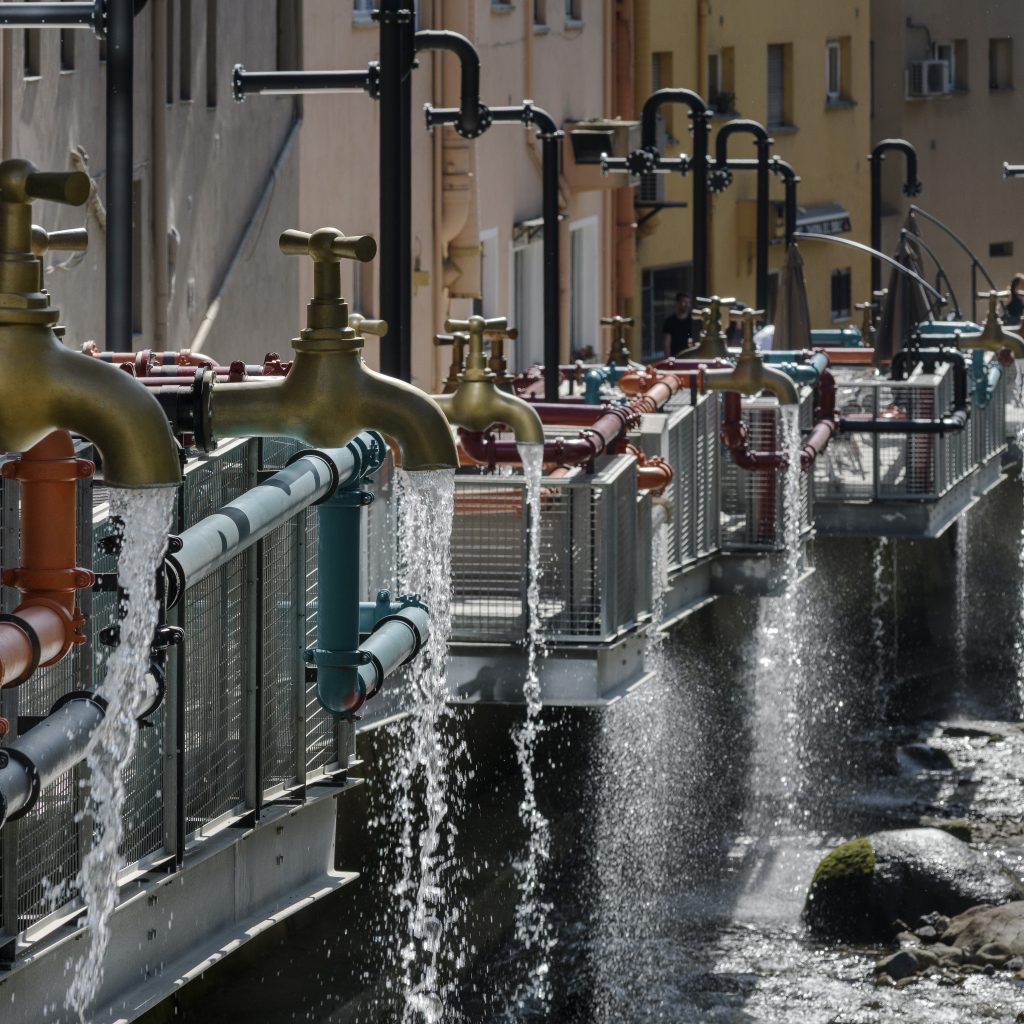
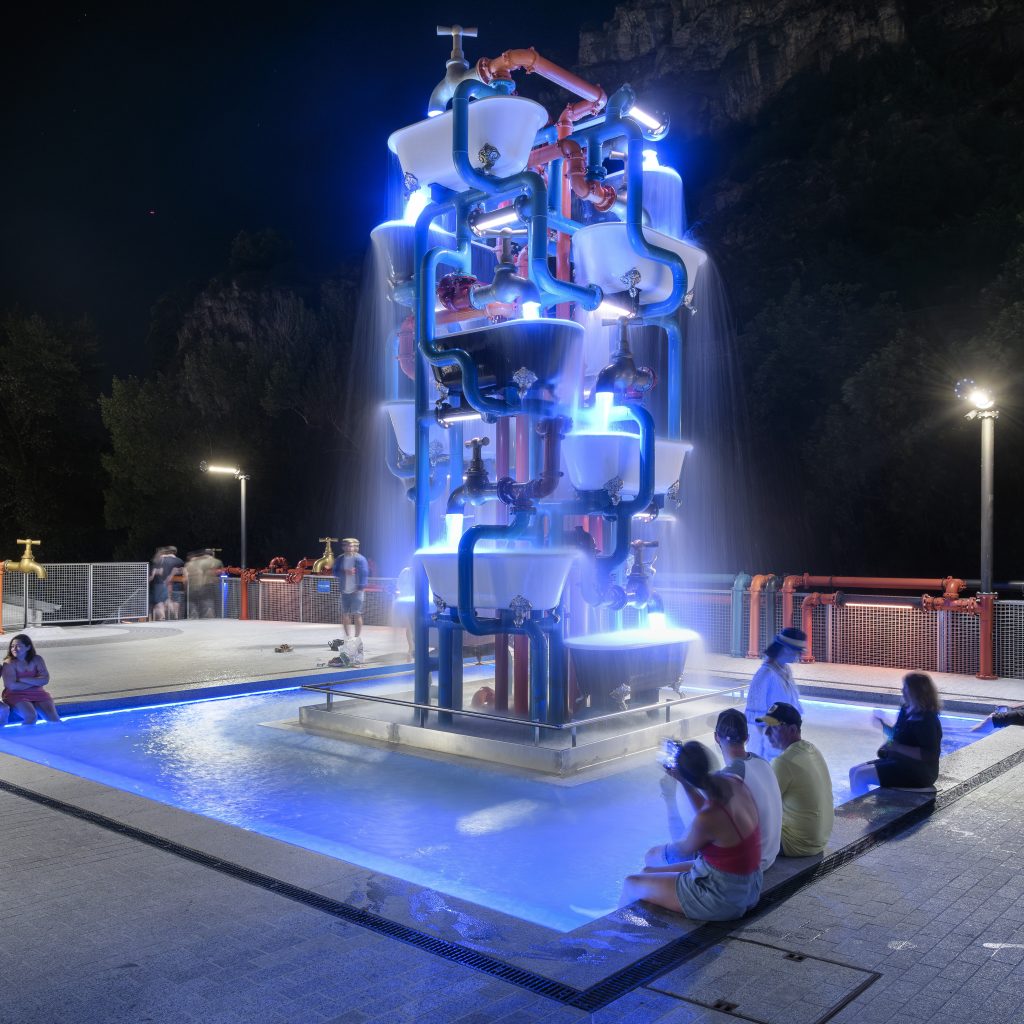
One of its most distinctive elements is L’Aigua i la Forma, an intervention by artist Javier Balmaseda that takes water as its starting point to explore the relationship between nature, territory and architecture. Springs, pipes, taps, washhouses and forms inspired by the movement of water are integrated into the streets and squares, turning the urban space itself into part of the artwork. Water — thermal, river and drinking water — thus becomes the guiding thread of the route, present in functional, aesthetic and symbolic ways.
The Caldes Project offers a contemporary approach to understanding thermal heritage: not simply preserving it but making it visible and integrating it into the town’s present-day life, connecting the memory of the past with new uses, new experiences and new ways of experiencing urban space.
From Traditional Thermalism to Contemporary Wellness
The thermal tradition of Escaldes-Engordany continues to evolve today. The economic and tourism transformation of Andorra during the second half of the 20th century gave a new dimension to the use of its thermal waters.
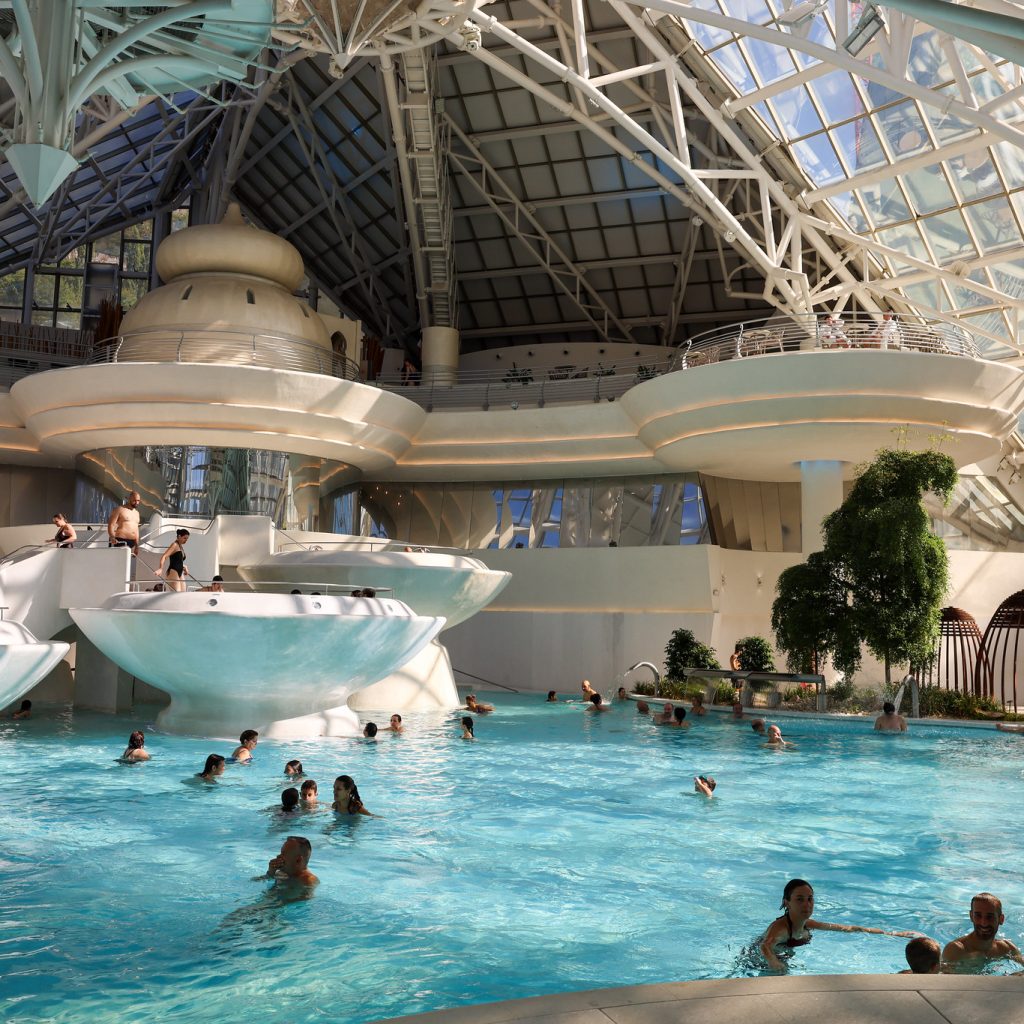
In this context, the opening of Caldea in 1994 marked a new chapter. Its distinctive building, designed by French architect Jean-Michel Ruols, became an architectural icon of the country and a new benchmark for thermalism in the Pyrenees.
Caldea represents the evolution of a centuries-old tradition towards a contemporary concept of wellness, leisure and experiences centred around thermal water. The coexistence of historic thermal heritage and new wellness spaces allows Escaldes-Engordany to be understood as a living thermal town, where tradition also serves as a starting point for innovation.
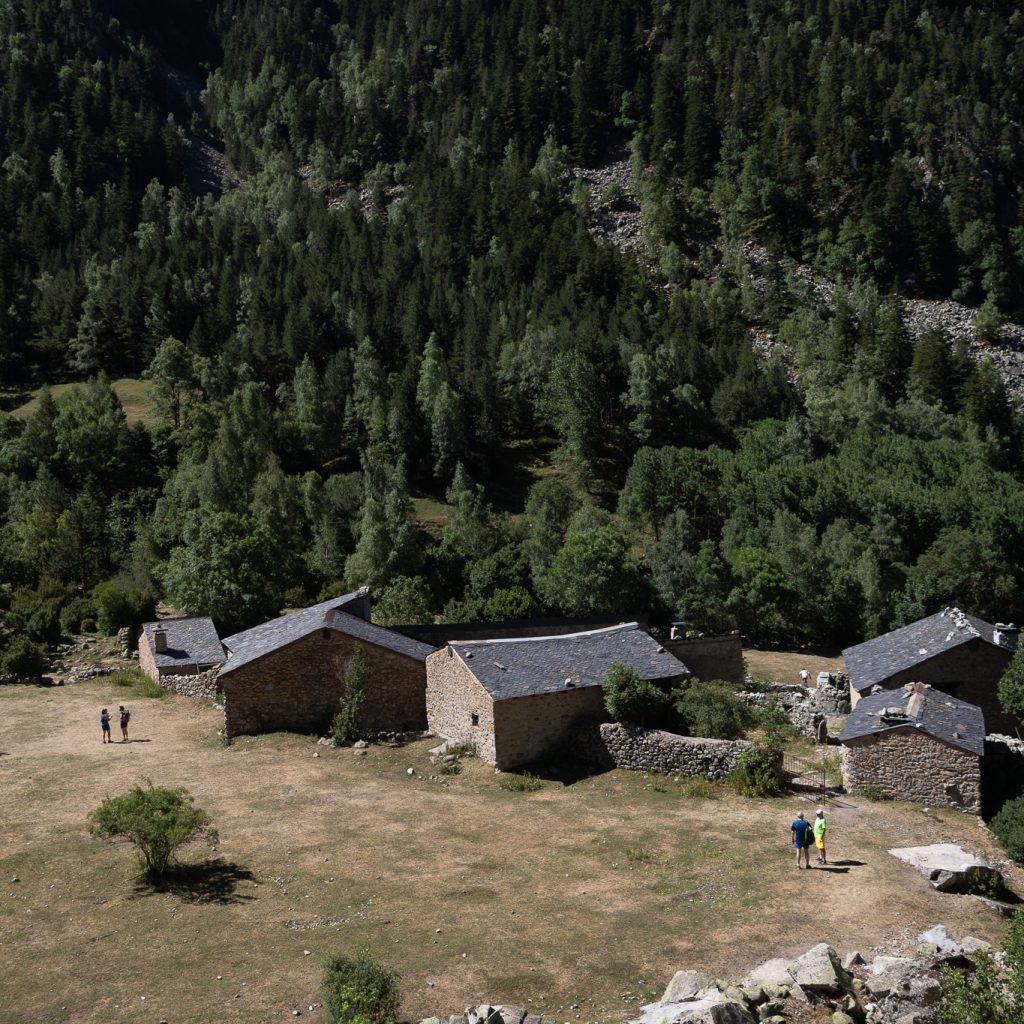
The Madriu-Perafita-Claror Valley
Beyond the urban centre, the Madriu-Perafita-Claror Valley represents another essential dimension of Escaldes-Engordany’s identity. Declared a UNESCO World Heritage Site in 2004, it is an exceptional cultural mountain landscape that preserves the traces of centuries of interaction between human communities and the territory.
Paths, traditional mountain huts, dry-stone walls, terraces and pastures bear witness to ways of life and the traditional use of mountain resources, while the Madriu River runs through the valley before reaching Escaldes-Engordany, creating a natural connection between the high-mountain landscape and the town.
This continuity between mountain, river and town allows Escaldes-Engordany to be understood as a territory where natural and cultural heritage come together, and where water continues to spring forth, writing the living history of this historic thermal town.